Sculptural floral objects.
Built from folded leaves and shaped stems, with as much attention on the space as on the flowers.
For your table, a storefront, or a gallery wall.
Made in Toronto, one at a time.
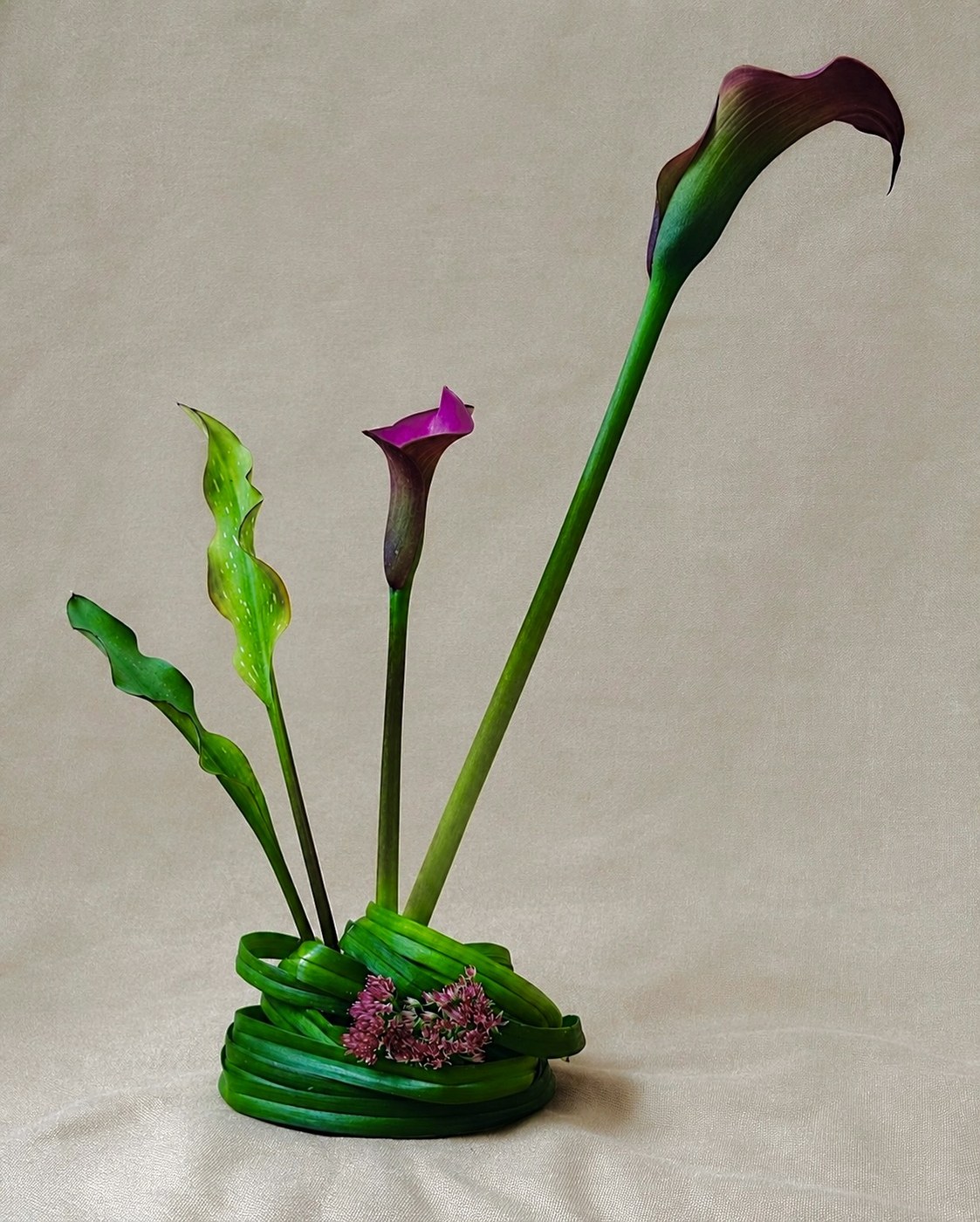
The work
This one was built for a table.
For the table
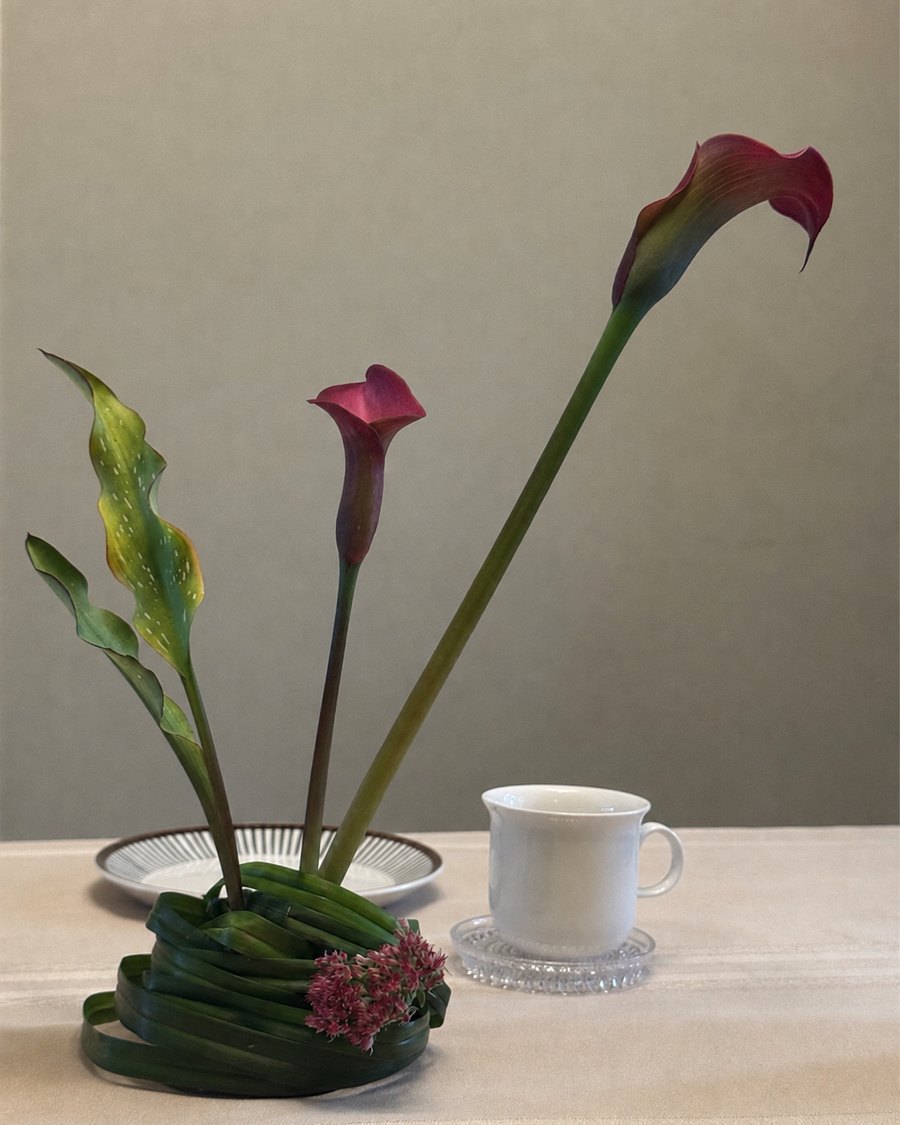
Coil, two callas
Low enough to talk across.
The coil keeps the weight at the table and sends the line up and out of the way, so nothing sits between the people eating.
Strap leaves looped back on themselves until the base holds its own shape — the leaves are the vessel, with a kenzan in a shallow bowl of water hidden inside the coil. Two callas and one sedum head.
More as they're made.
Where a piece goes
At home
A table for a dinner or a gathering — low enough to talk across.
In a shop
A counter, window or shelf in a store, café or studio — one piece, or something built to the scale of the space.
On its own
A single piece for a gallery, a launch or a shoot, standing with nothing around it.
How it's made
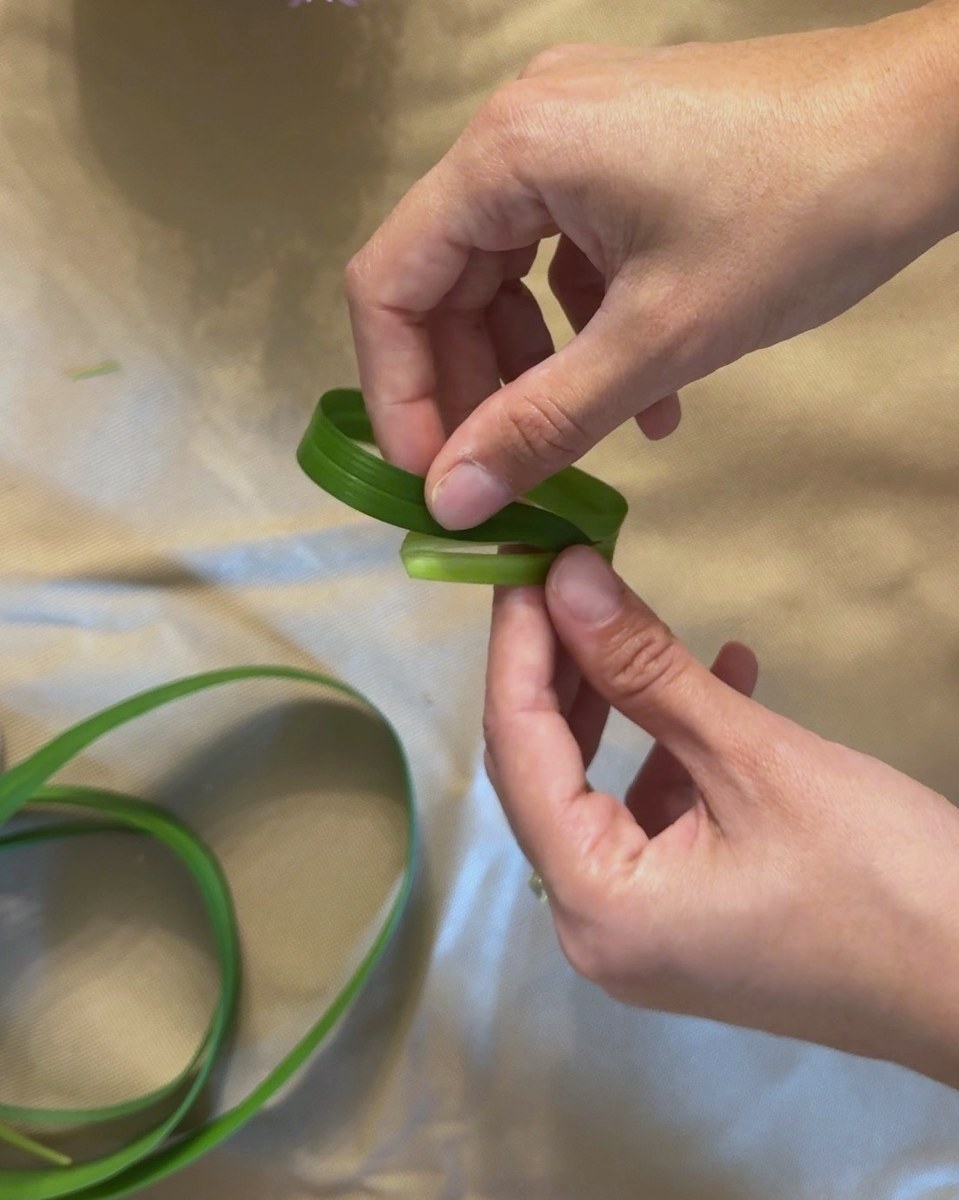
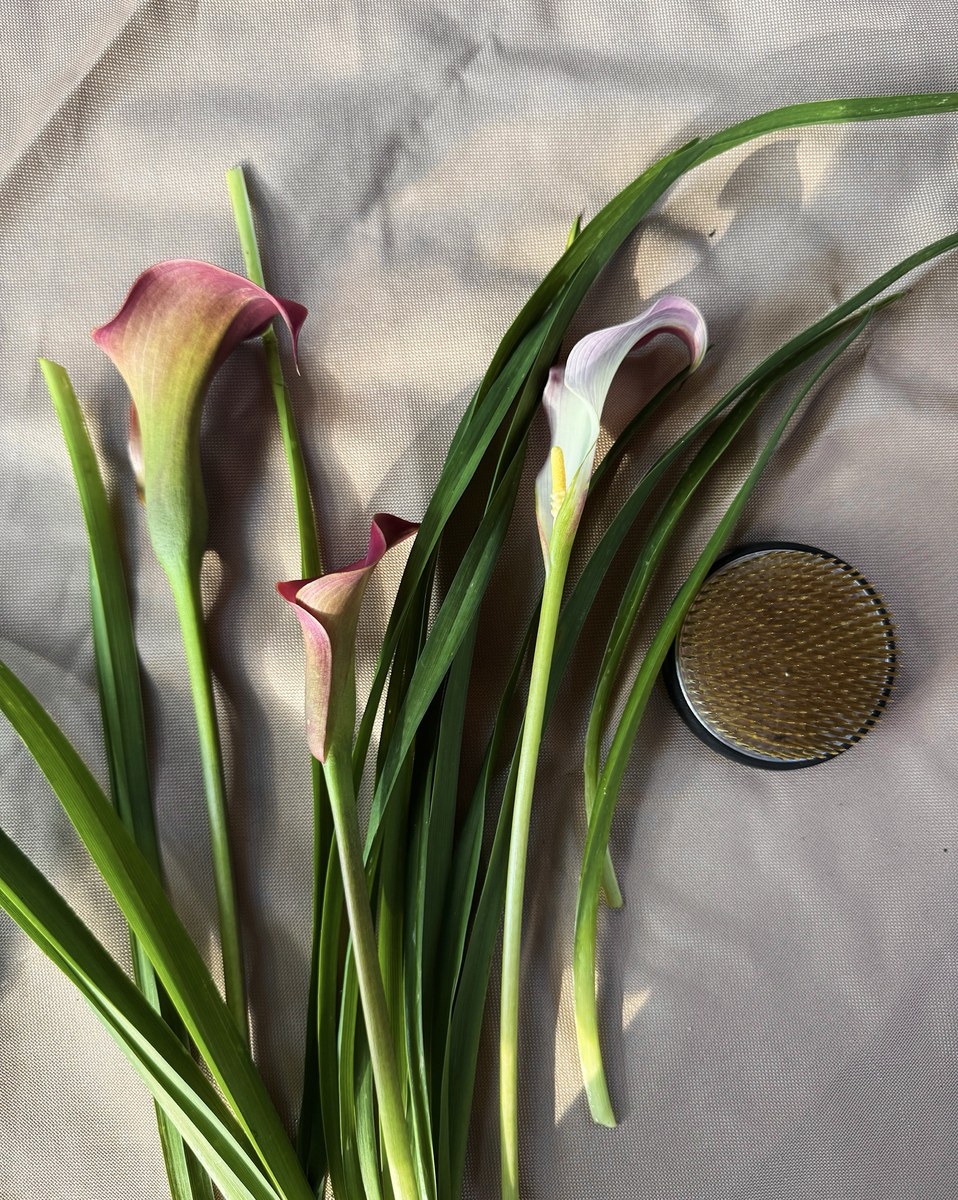
The material is the structure. A leaf is folded and creased until it holds a shape on its own, so the piece holds its shape by its own geometry.
Nothing is trimmed off and thrown away — the whole stem and leaf is part of the build. That habit came from sustainability and building-performance work, where the question was always what a material can still do before you replace it.
The kenzan I work with came from a small shop in Kanazawa. An object and an influence, not a credential.
About
Noema is a floral studio in Toronto, led by Melika, previously a sustainability and building-performance consultant. The work is ikebana-inspired and self-taught — shaped by watching rather than by a classroom.
Two things sit underneath it. A Persian sense of hospitality, which is why a piece is built for a table people will actually sit at. And a habit carried over from that earlier work: using the whole stem and leaf as structure instead of discarding it, and putting found objects to work as vessels, like an old teapot.
Get in touch
I'm not taking bookings yet. If you're thinking about something for later — a table, a shop counter, a window — write to me now and I'll come back to you when I'm open.